
 MarketingShot
Hi there, this is your daily ☕️ MarketingShot.
In today's MarketingShot:
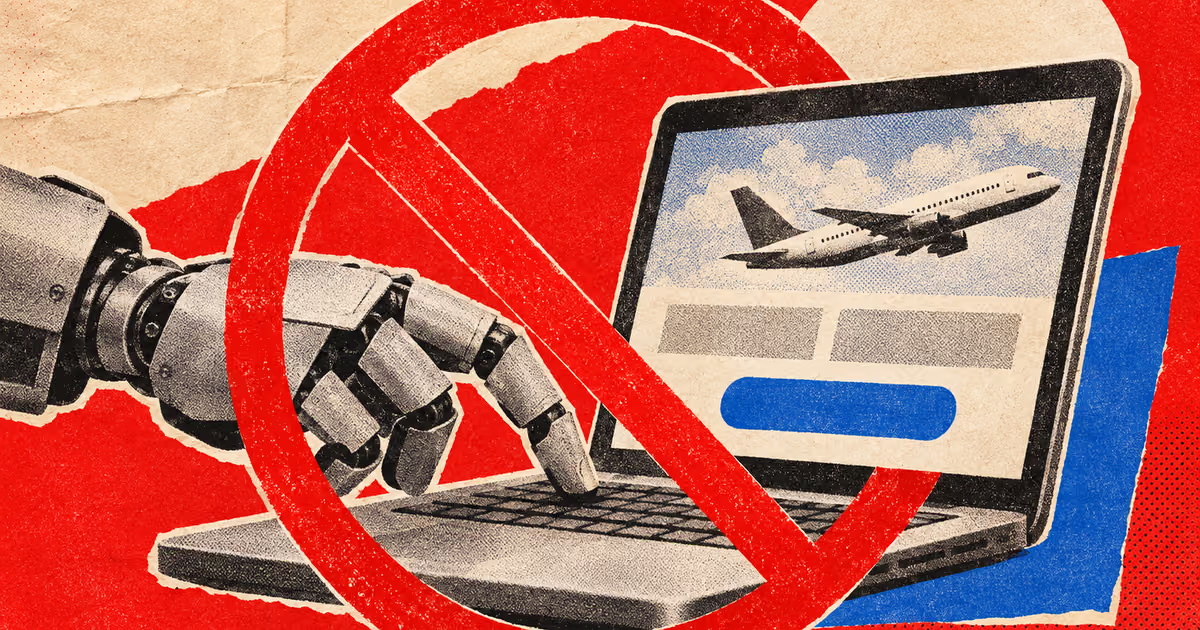
✈️ United just blocked AI agents from booking its flights
🎨 Adobe bets on human creativity against cheap AI tools
💸 Google Ads will now show your wasted bot spend
📉 The top 1 million sites lost 12% of visits since 2022
📊 IAB's new framework measures AI's role in your conversions
Plus: 💡 6 strategies & tactics, 🎁 7 more stories you might like, and 🧰 6 tools.
United just blocked AI agents from booking its flights LINK
- United Airlines revised its Contract of Carriage today to ban AI agents from booking, changing or servicing tickets and from buying seats, upgrades or other extras, placing them alongside hidden-city and throwaway ticketing as prohibited practices.
- The new Rule 6.J.6 holds even when a passenger watches and approves every step, since the definition covers semi-autonomous software, and United says it can cancel any reservation an AI agent made, including bookings routed through a travel agency's tools.
- An AI can still show United flights and prices as long as the customer completes the purchase, but InsideFlyer said the restriction could mean more time comparing fares by hand and less help weighing total price, elite status or card benefits.
Adobe bets on human creativity against cheap AI tools LINK
- Adobe has launched "Made to Create," its first integrated brand campaign in five years, which puts human creativity ahead of its software as the company defends the value of creative work against cheaper generative AI startups.
- The campaign was placed at the center of Adobe MAX in Miami and featured more than 30 artists from 18 countries, spanning Adobe's full product lineup rather than promoting Photoshop or Premiere on their own.
- Adweek reports Adobe's AI-first annual recurring revenue rose more than 150% year over year, while monthly active users across its free and paid products passed 100 million, though the figures do not show users want a more automated creative process.
Google Ads will now show your wasted bot spend LINK
- Google Ads has introduced the Invalid Traffic Overview Card, a feature that shows advertisers the dollar amount their campaigns saved through Google's invalid traffic blocking and how much they were credited for bots caught after billing.
- When invalid traffic is detected after the billing cycle, the credit matches the wasted spend exactly, so $100 deemed invalid produces a $100 credit, applied automatically as a billing adjustment on the next invoice with no restrictions on inventory.
- Google says AI-driven improvements cut ads served to invalid traffic by 40% between 2023 and 2024, while the feature answers past complaints that advertisers had little transparency into how they were compensated for ads served to bots.
The top 1 million sites lost 12% of visits since 2022 LINK
- SparkToro reported that visits to the world's top 1 million websites dropped 12.2% between their peak in the first quarter of 2022 and the third quarter of 2026, even as the online population grew.
- The study, by co-founder Rand Fishkin using Similarweb clickstream data, found total visits peaked at 2.243 trillion in early 2022 and fell to 1.970 trillion, with the top 100 sites gaining only about 3 percentage points of share.
- Because the pool of browser visits shrank while users rose, SparkToro calculated a 29.2% fall in visits per user, though that figure leans on DataReportal counts inflated by revised India and China numbers, making the real per-person drop probably smaller.
IAB's new framework measures AI's role in your conversions LINK
- The IAB today released "The AI-Era Attribution Blueprint," a framework giving advertisers, agencies, publishers, and AI platforms a shared way to decide who can claim credit for a sale that AI influenced or completed.
- The blueprint sorts conversions as human-owned, AI-assisted, or AI-executed, then asks who created the intent, made the decision, and finished the purchase to decide which parties can claim attribution and what evidence they must show.
- It arrives as AI thins out the clicks and referrals attribution depends on, with 45% of ad buyers calling the comparison of AI-driven and traditional journeys their top measurement challenge, though it does not fix the missing data itself.
Strategies & Tactics
> How Long Should Instagram Reels Be? We Analyzed 2.7 Million Reels: Make reels 90 seconds to three minutes for reach, but go longer only for existing followers, who engage more despite smaller reach.
> AI traffic quality: Look past the industry benchmarks and measure ROI: Measure whether AI-referred visitors actually convert and spend on your own site, since industry benchmarks vary too much to guide investment.
> How to Increase Form Conversions and Generate More Leads: Match each form to where visitors sit in the buying process, cut fields and friction, and use benefit-led buttons and privacy notes to lift completions.
> Retailer data can sharpen social. It can also inflate the bill.: Combining retailer purchase data with social ads sharpens targeting and measurement, but higher costs and attribution that doesn't prove causation demand scrutiny before spending.
> Google SEO advice on moving to a CDN – content delivery network: When moving to a content delivery network (CDN), let Google's crawlers bypass bot-blocking rules so a sudden crawl spike doesn't lock them out.
> Google Ads shortens Smart Bidding learning status to 7 days: Google's automated bidding now caps its "Learning" status at seven days and no longer flags budget or creative changes, letting advertisers adjust campaigns more freely.
Other news you might like
- LinkedIn Is Testing a Frequent Viewer Feature LINK
- 65% of US adults have turned to Reddit or TikTok when Google didn't help LINK
- Ashley Furniture beats Walmart 66.5% to 13.4% in AI Overviews deal answers LINK
- As ‘Deinfluencing’ Trend Shapes Christmas Shopping, “Brands Need to Mean More” LINK
- Inside Adobe's fast-moving AI partnerships team LINK
- Google says AI search shoppers visit 12 touchpoints, nearly 3x more LINK
- OpenAI expands ChatGPT Ads to 44 countries via Aleph LINK
Trending tools
beacon.sh: open-source persistent memory for AI coding agents, retaining context across sessions so they learn from past work instead of restarting each time. LINK
Pexo: an AI video agent that turns ideas into finished videos through conversation, so you can create content without editing or technical skills. LINK
Scalekit: connects AI agents to 30,000+ tools across 600+ apps via one MCP gateway, handling auth, scopes, and per-user permissions for production. LINK
OpenSwarm: an AI-first operating system where agent swarms run the machine, letting you orchestrate dozens of parallel tasks instead of working sequentially LINK
PixVerse R2: generates interactive video in real time, producing continuous streams that respond instantly to your input for live creative control LINK
Web Search Agents by Nimble: domain-specific crawling agents that self-learn your use case to pull deeper research for company enrichment, regulatory tracking, and ongoing monitoring. LINK
See you tomorrow for a new dose of ☕️ MarketingShot!