

Hi there, this is your daily ☕️ MarketingShot.
In today's MarketingShot:
🚫 Meta blocks TikTok ads in 7 markets, hitting your campaigns
🎭 The creator economy is splitting your buys in two
💀 Meta just killed manual ad placement for 4 campaign objectives
🎯 Google Ads keeps Lookalike targeting alive for Demand Gen
Plus: 💡 4 strategies & tactics, 🎁 6 more stories you might like, and 🧰 6 tools.
🚫 Meta blocks TikTok ads in 7 markets, hitting your campaigns LINK
- Meta has stopped accepting ads from TikTok owner ByteDance across Facebook and Instagram in seven markets, and the block reportedly also hits outside brands whose campaigns send people to TikTok or other ByteDance pages.
- Meta began enforcing the restriction on October 8 in the United States, Canada, Egypt, Indonesia, Japan, Thailand and Vietnam, with spokesperson Chris Sgro saying the company need not promote a competitor trying to pull people from its apps.
- According to the article, advertisers may have to split creative, landing pages and measurement by platform, since a Facebook or Instagram campaign that once pointed viewers to a TikTok creator may now need a Meta-native destination, a neutral website, or a different creator.
🎭 The creator economy is splitting your buys in two LINK
- Brands are increasingly treating creator marketing in two separate ways, hiring major creators as creative partners while buying smaller ones in bulk for reach and distribution, according to Portal A president Zach Blume in a Digiday interview.
- Blume names MrBeast, Alix Earle and Druski as top creators brands ask for ideas and long-term integrations, while nano and micro creators work like distributed media inventory, valued for combined reach, targeting and repeatability across many accounts.
- The split changes what marketers measure: premium partnerships need creative judgment and audience fit, while scaled buys need systems for selection, disclosure and performance, and treating the two as interchangeable produces weak creative and inefficient media buying.
💀 Meta just killed manual ad placement for 4 campaign objectives LINK
- Meta has removed manual placement selection at the ad set level for campaigns using the engagement, leads, app promotion and sales objectives, leaving its delivery system to spread budgets across placements where ads are likely to perform best.
- In an experiment, ad sets using Advantage+ placements delivered a cost per result about 10% lower on average than ad sets that relied on manual placement settings, according to the company.
- Campaigns using the awareness and traffic objectives are not affected, and advertisers can still shape how ads appear through creative customisation, placement value rules that adjust bids, and account-level placement exclusions.
🎯 Google Ads keeps Lookalike targeting alive for Demand Gen LINK
- Google Ads will keep Lookalike targeting available for Demand Gen campaigns, but it is shifting the default so these segments act as audience suggestions instead of strict targeting limits.
- Advertisers pick from three Lookalike sizes built from first-party data like customer lists and website visitors, Narrow reaches the most similar users in a location, Balanced roughly doubles that pool, and Broad extends it further, trading similarity for scale.
- Those who want tight control can opt out and keep Lookalike segments as a targeting constraint, though Google warns broader targeting does not guarantee better results and advises watching conversion quality and acquisition costs.
From our partner
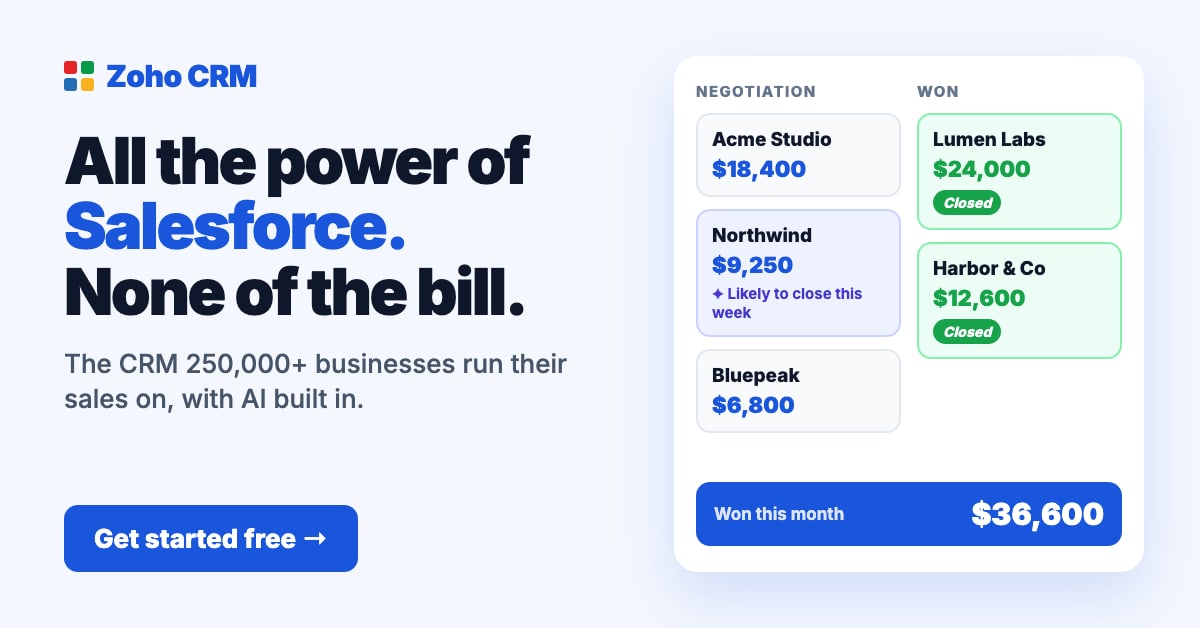
All the power of Salesforce, without the Salesforce bill. Zoho CRM runs sales for 250,000+ businesses across 180 countries, with built-in AI and telephony the big names charge extra for.
• Zia, the built-in AI that predicts which deals will close and flags the ones going cold
• Every lead, email, call, and deal in one view. Full pipeline visibility, no spreadsheet chaos
• Automated workflows that handle the admin so your team actually sells
💡 Strategies & Tactics
> How to Find Out Who Gemini Cites for Your Query, and Why It Isn't You: Explains how to test whether Gemini cites your page by running a query five times through Google's developer interface, counting recurring sources and comparing their claims against yours.
> AI Landing Pages: From Project Plan to Published Page: Explains how to build and publish converting landing pages without a developer by planning the full funnel in ChatGPT, then executing the design and copy in Codex.
> The benefits of server-side tracking — and what it takes to get them: Routing visitor data through your own server before sharing it with ad vendors gives more control and cleaner measurement, but demands ongoing management to pay off.
> AI search is helping people ask bigger questions. Is your brand ready?: Create in-depth content for specific customer situations rather than high-volume keywords, because AI search lets people ask detailed, personal questions that make relevance situational.
Other news you might like
- Ask YouTube expands to mobile, web, and TVs across the US LINK
- Google: Poor Image Quality Won't Stop Products From Showing In Search Or Ads LINK
- Google returns wrong results on 11% of DemandSphere's daily rank checks LINK
- How Lowe’s is building — and measuring — a full-funnel media network LINK
- X rebuilds its third-party usage showcase LINK
- Gen Z games for nine hours a week, challenging brands' attention assumptions LINK
🧰 Trending tools
Spira Maxima: autonomous AI influencers that create on-brand content and publish across TikTok, Instagram, and X around the clock, with optional chat-app oversight. LINK
GenPage 3.0: builds dedicated landing pages for each ad, keyword, and account, learns your brand, and automatically A/B tests every page. LINK
Naoma AI Demo Agent V2: an AI account executive that runs live product demos, answers questions, qualifies prospects, books meetings, and syncs sessions to your CRM. LINK
Anysite.io: delivers targeted B2B company and contact lists to AI agents via MCP or REST, no scraping or infrastructure needed. LINK
Browzer: connects to your GitHub repo to auto-draft demo videos, blog posts, changelogs, and docs, keeping them updated on every merge. LINK
PixVerse R2: generates infinite, interactive video in real time, producing continuous streams that respond instantly to your input for live creative control. LINK
See you tomorrow for a new dose of ☕️ MarketingShot!